From the beginning, it seems my grandparents were on similar paths. Both of their families lived in Arkansas, where their families worked as farmers. Both of them were born to young mothers but raised by their grandparents. Both of their families left Arkansas and moved to a small city in Richmond, California, looking for a better life.
My grandfather Larry Stringer was raised by his grandfather Joe Bain Stringer and his grandmother Daisy Mae Stringer after his mother left him and moved to Los Angeles, California. My grandfather has fond memories of growing up on his grandfather’s farm. His mother would eventually go back to Arkansas to get him, and they would move to Richmond California as she looked for better work opportunities.
My grandmother’s grandparents and their three kids moved to Richmond, California in 1942 hoping my great maternal grandfather would be able to get a job at the shipyards building for the war effort.
Do better than me, be better than me – Patra L. Stringer (my grandmother)
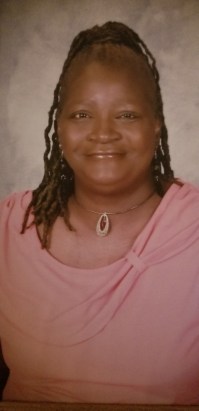
Pain and suffering can be used as fuel to set a fire of self-improvement or an uncontrollable blaze, burning your life down with no water in sight to save you.
I have often wondered how my grandmother turned her pain and suffering into a life that makes us proud. Her first dealings with pain came at age 4, when her mother would bleed to death after what was supposed to be a routine tooth extraction, they later learned that she had leukemia and some form of cancer would claim the lives of her other four siblings all before the age of 60.
After her mother died, she and her four siblings would go to live with their grandmother. As, my grandmother would tell it, her grandmother was rough around the edges, born in Arkansas into a family of 14 children, her grandmother was raised farming as most Black families did back in those days, education was not a choice, families back then worked hard day and night, and my great grandmother instilled hard work ethic into my grandmother. She would make my grandmother and her siblings work to earn money for the family; education was not a choice.
My grandmother dropped out of school in the 7th grade. The future was not some distant five-year plan, but tomorrow, just getting through the day. My grandmother told me, she had dreams, she was a runner, a sprinter, and was one of the fastest in her city. Racing and winning brought her pride and joy. One of the most vivid and most haunting times for her, was when she, a skinny black girl was chosen to run on a team that was supposed to be the next great Olympic team. She describes, the joy and excitement she felt when she was asked. It took her no time to get home, break through the door with the power of the wind she had created behind her. She ran into her grandmother’s room to tell her the news. And, with one fatal word, my grandmother’s world would crumble like dry bread. “NO!,”, said her grandmother, ”those White people ain’t to be trusted. They gone steal you child! No! you gone stay right here with us.” My grandmother would relive that moment, obsess over that moment until she lost interest in running and in school. Nowadays, my grandmother’s symptoms might be recognized as depression, but back in those days, Black people, and in some instance today, do not believe in mental health issues. Mental health is not discussed, people are expected to shake things off and keep moving.
My grandmother kept moving the only way she knew how. She found work cleaning houses, and she married when she was 15. My grandmother went on to be a single stay at home mother raising five children. With no education life was tough, welfare being the sole means of providing for her family. But, she vowed to herself that her children lives would be better than hers, so after years of struggling and starving, she got a job working as a groundskeeper for the City of Richmond, California.
My mother tells me how my grandmother would often tell her and her siblings, do not make the same mistakes I did. Be smarter than me. Do better than me. Demanding that her kids finished high school so they can get good jobs and have more money than her. Education was no longer a choice.
A man should have keys – Larry Stringer (my grandfather)
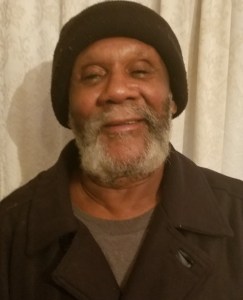
The farm was all my grandfather had known for the first eight years of his life. As an only child, he often played with his cousins. When his mother returned to Arkansas, after abandoning him for eight years, and moved him to Richmond, California; this transition would put him on a path of near to self-destruction. Robbing, stealing cars, drugs and jail would paint the picture of his life for over 40 years. During his early years, he would become friends with my grandmother and her four siblings. At 15, he and my grandmother would marry, shotgun style.
My grandfather has been very truthful about the pain he caused his family and about his struggle with drugs. Like my grandmother, I believe my grandfather suffers from mental health issues due to abuse from his mother and several stepfathers, but again, he did not receive help dealing with his abuse, so he dealt with the best way he knew how drugs and alcohol.
Today
My grandparents made it through their myriad of struggles. They teach us what resilience looks like every day and I am thankful for them.
Oral History Questions
Self Introduction
1. Describe an average day in your neighborhood?
2. Best childhood memory?
3. What did you do in your spare time?
4. How did grandpa propose?
5. Scariest memories?
6. How did the family feel about you marrying so young?
7. What major world events do you remember? What were your opinions on them?
8. What values did you try to raise your children with? How did you go about doing that?
9. What was most satisfying to you about raising children? What was most difficult?
10. How long did you have to work each day at your job?
11. If you had to do it all over again, would you change the way you raised your family?
12. How did you first hear that you were a grandparent and how did you feel about it?
13. Who was the oldest person you remember as a child?
14. How did you react to the assassination of President John F. Kennedy?
15. How did you react to the assassination of Martin Luther King?
Bibliography
United States Department of Commerce. 1930. Population Schedule. Retrieved from http://www.ancestry.com/interactive/6224/4532442_00657/87001856?backurl=https://www.ancestry.com/family-tree/person/tree/108248358/person/180067510850/facts
Wheeler, B. Gordon. Black California: the History of African-Americans in the Golden State. Hippocrene Books, 1993.
Fouriezos, Nick. “When Arkansas Was a Promised Land for Black People.” OZY, http://www.ozy.com/flashback/when-arkansas-was-a-promised-land-for-black-people/82268.
 familybibile.family.blog